Pillar one
Dialogue
A permanent forum for responsible dialogue among recognized faith traditions, scholars and peace institutions.
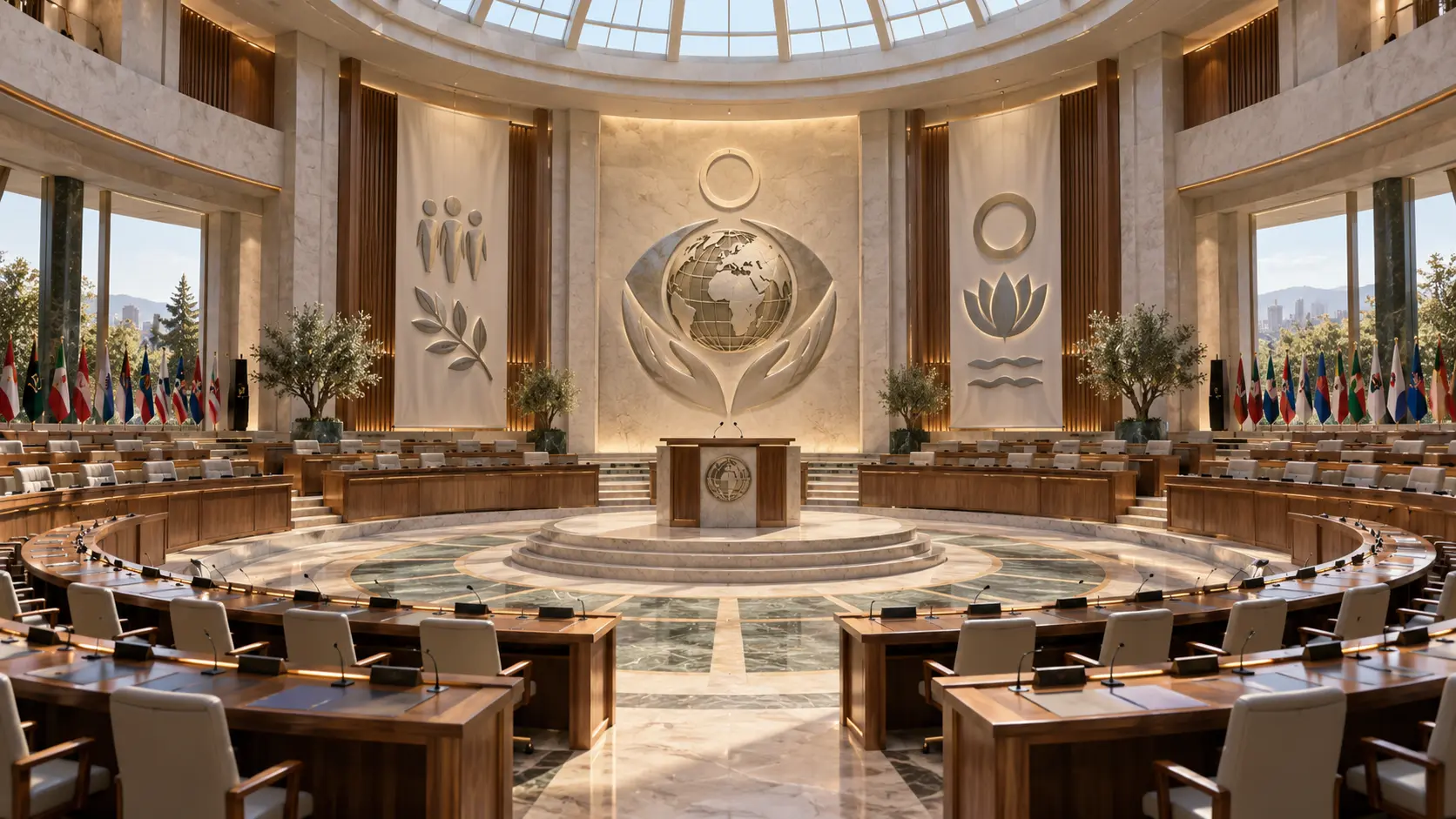
Proposed international institution
The World Religious Peace Parliament is being developed as an independent, non-political and non-sectarian platform for dialogue, conflict prevention, humanitarian cooperation, research and peace education.
Proposed for establishment in Italy · Global participation envisioned · Institutional development in progress
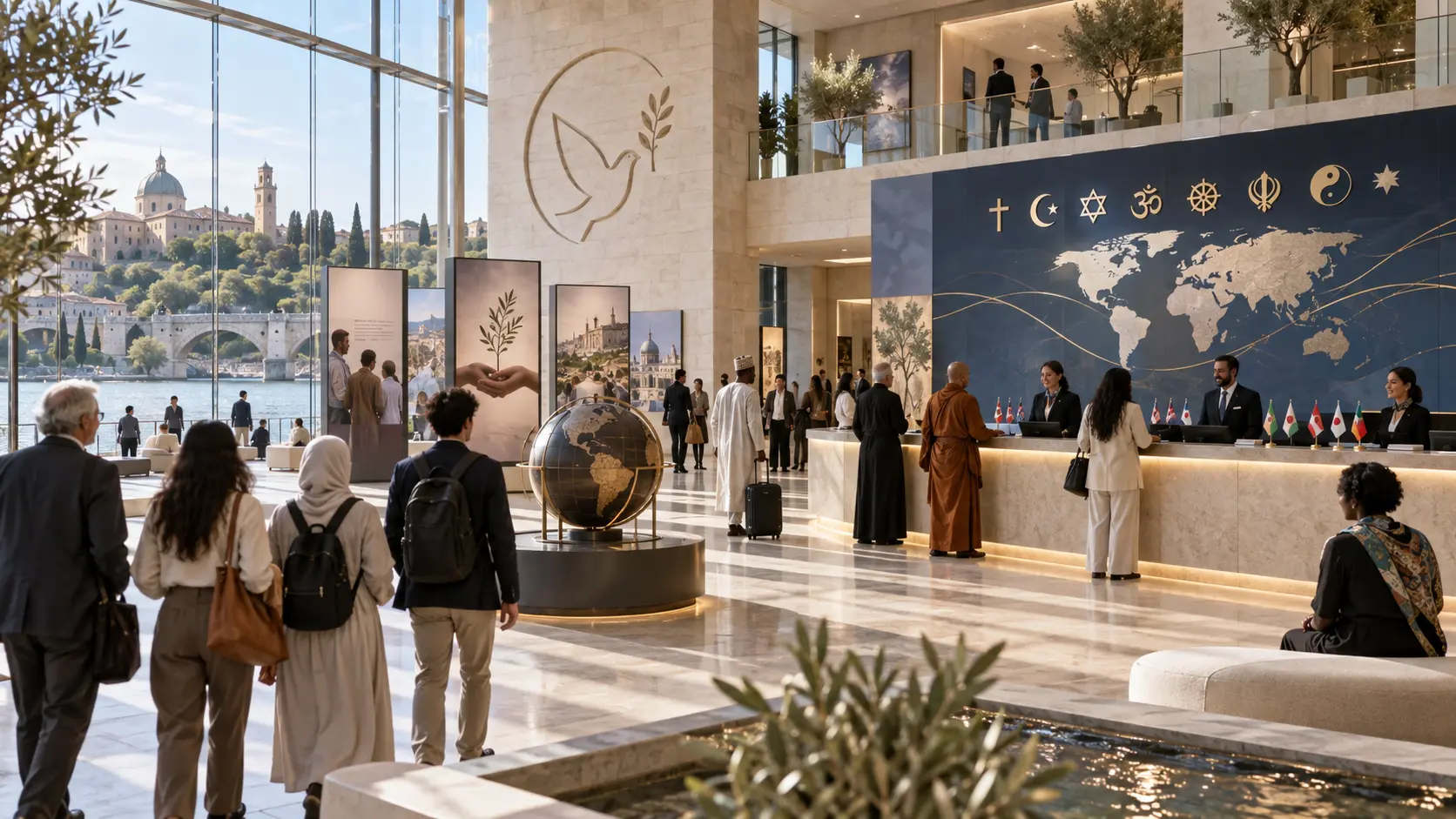
Image: concept visualization
To create a trusted international platform where religious leaders, public institutions, scholars and civil society can cooperate to prevent conflict, protect human dignity and advance practical peace.
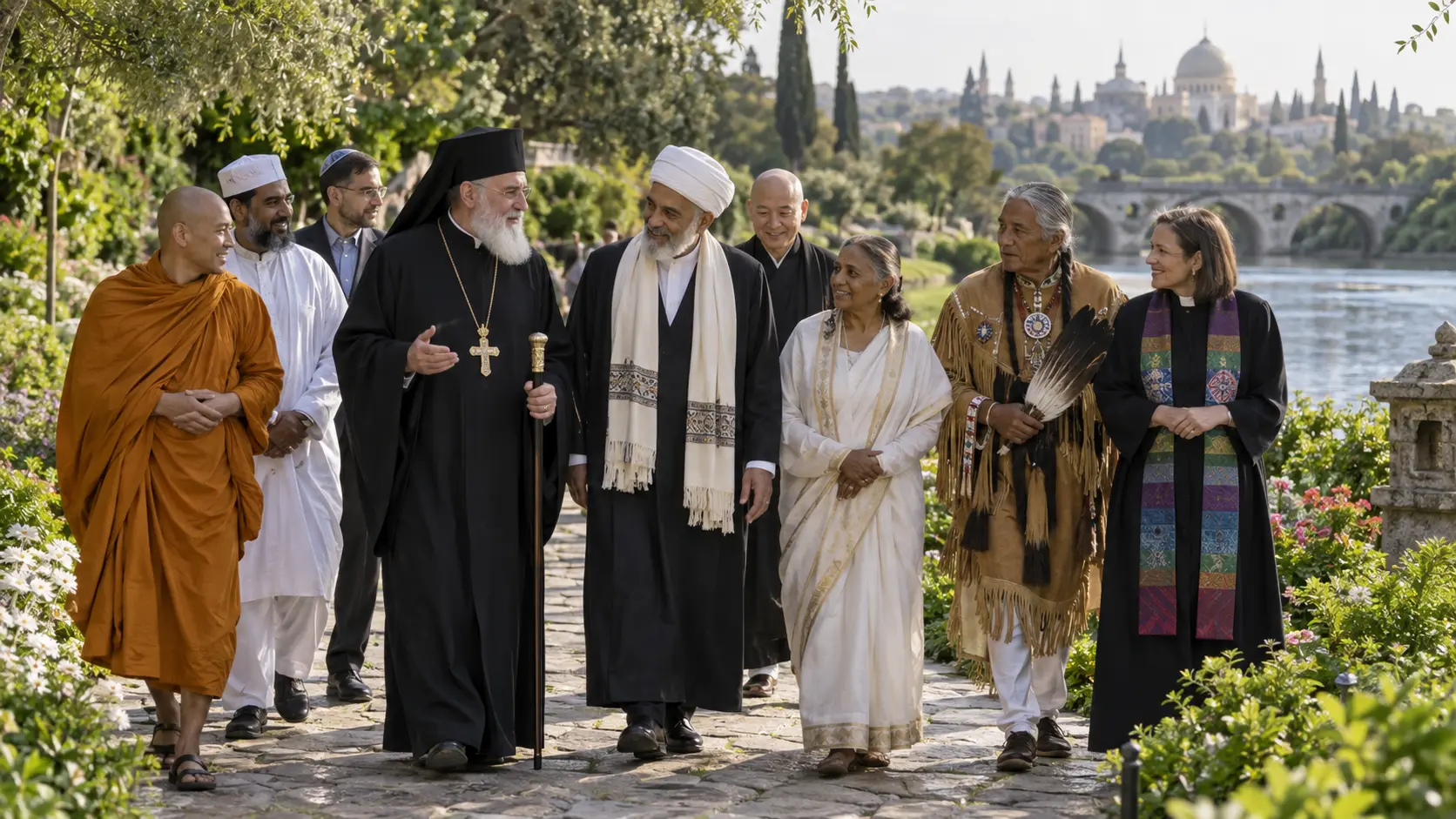
Religious identity shapes the lives of billions of people, and faith leaders carry significant moral influence within their communities. Misinformation and religious misunderstanding can escalate tension quickly, yet there is no single neutral, parliament-style platform dedicated to religious peace in which public institutions may also take part without directing religious representation.
Pillar one
A permanent forum for responsible dialogue among recognized faith traditions, scholars and peace institutions.
Pillar two
A structured channel through which governments and public institutions may participate without controlling religious representation.
Pillar three
Programmes focused on mediation, humanitarian coordination, peace education, research and measurable community outcomes.
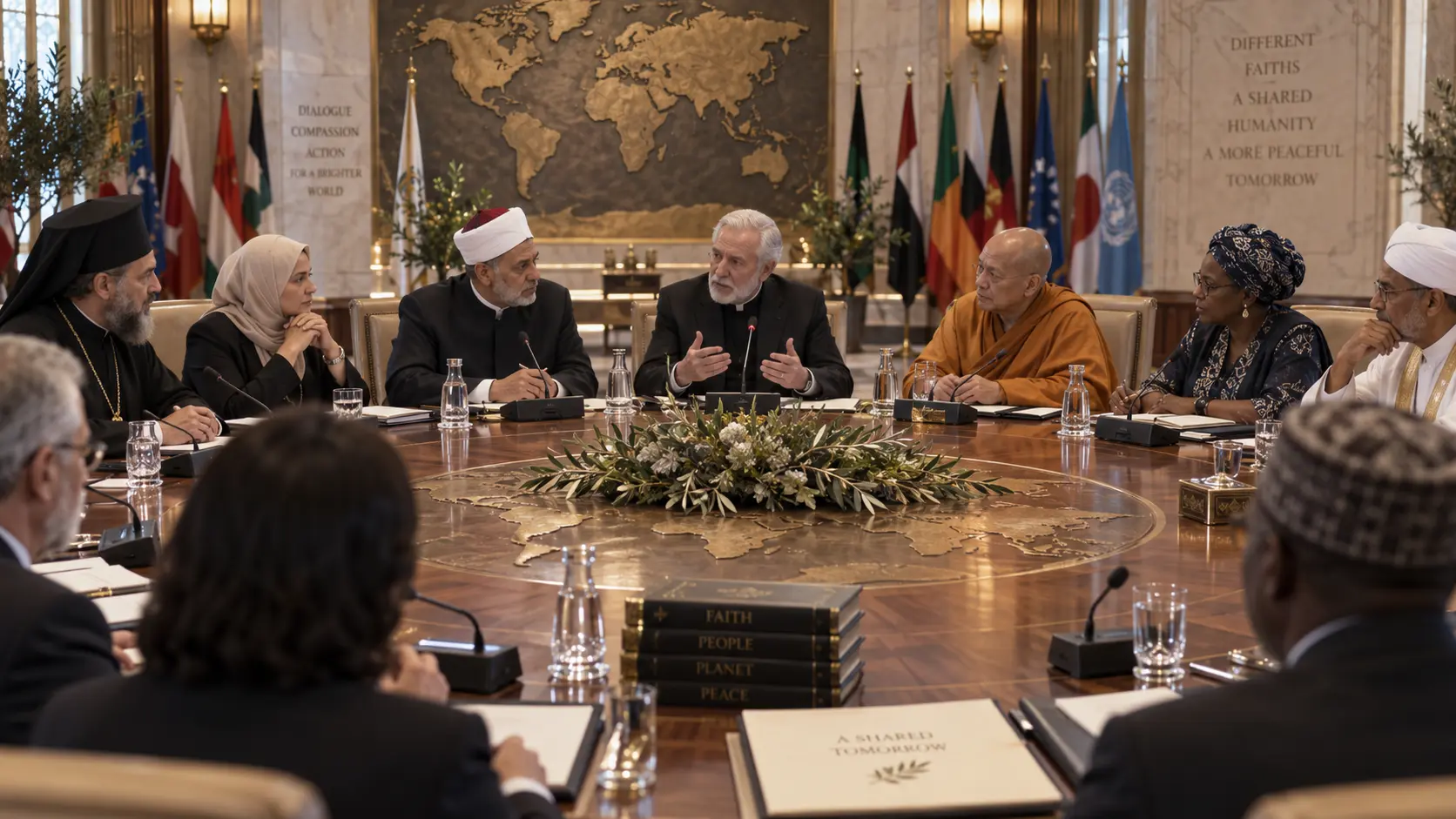
Two institutionally separate chambers are proposed so that faith communities and public institutions may cooperate without either controlling the other. The complete model is a proposed governance framework and is not yet adopted.
Proposed chamber
For religious leaders, scholars, peace institutions and recognized faith communities.
Proposed chamber
For participating governments, public institutions, observers and international partners.
Each portfolio below is under development. None is described as operational until it has been formally established.
Proposed — method design and consultation
To provide a standing, neutral forum in which recognized faith traditions can meet in dignity and address shared concerns without any tradition being ranked above another.
Proposed — curriculum and safeguarding design
To offer, on request only, faith-sensitive mediation support in community-level tension where religious identity is a factor.
Proposed — partner consultation
To coordinate willing faith-based and community relief organizations so that assistance reaches people without discrimination and without duplication.
Proposed — preliminary academic discussions
To build an independent evidence base on religion, conflict prevention, coexistence and the social role of faith communities.
In development — language and dialogue learning available
To develop teaching material that helps young people understand religious difference accurately and speak across it respectfully.
Proposed — council terms of reference in drafting
To ensure that women's participation in religious peacebuilding is structural rather than symbolic.
Only verified and approved information is published. Reserved seats appear without names or photographs until the individual concerned has given written approval.
Sayed Ali
Founder and Convenor · United Kingdom
Reserved — Founding Council seat
To be confirmed · To be confirmed
Reserved — Founding Council seat
To be confirmed · To be confirmed
Reserved — Secretary-General
To be confirmed · To be confirmed
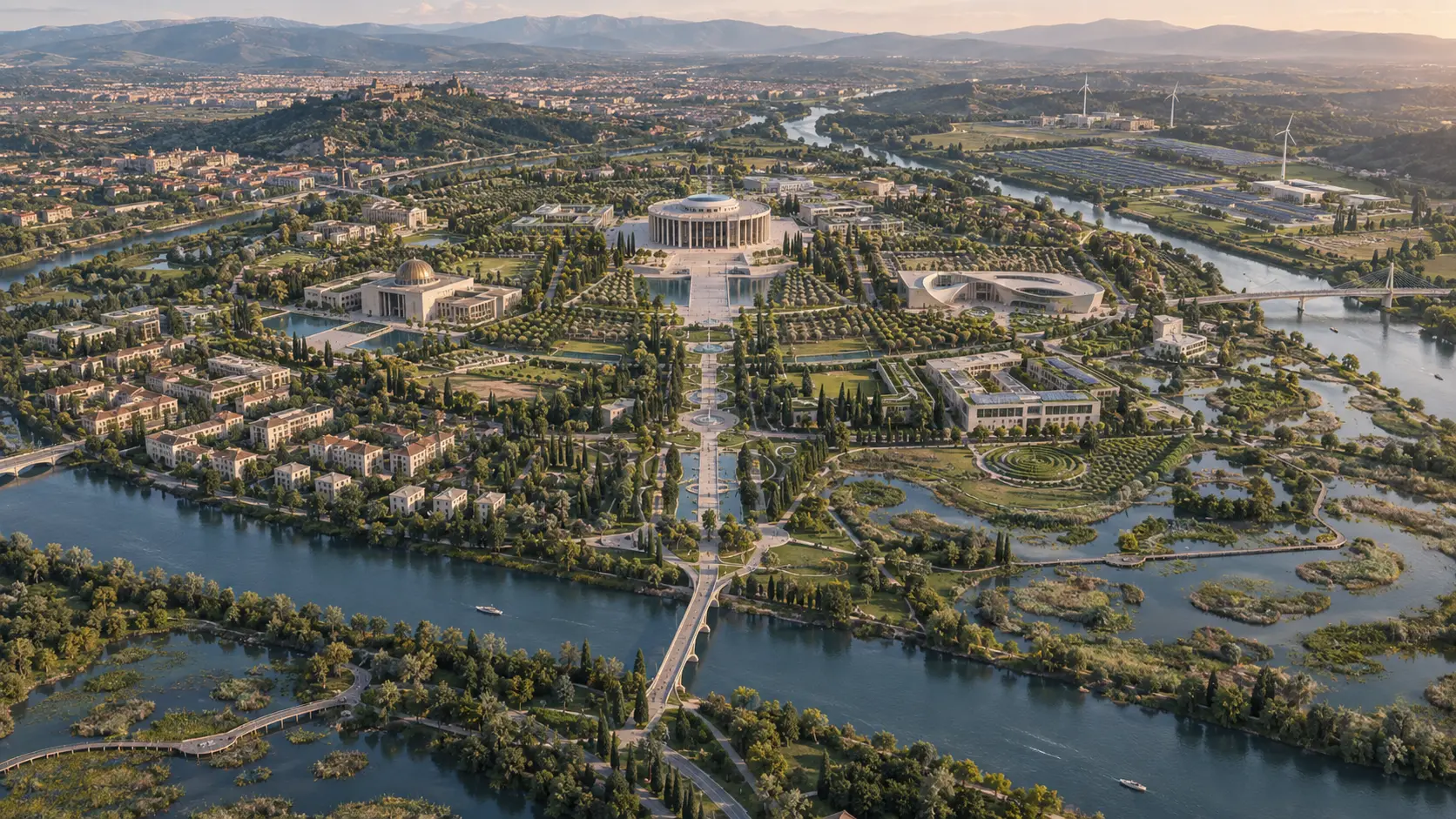
A long-term master-plan concept only. No land has been secured and no planning approval has been granted.
Five phases, with all future dates treated as indicative unless officially confirmed.
Phase 1
Legal structuring, charter development, founding council and advisory consultations.
Phase 2
Membership verification, academic partnerships, religious consultations and pilot programmes.
Phase 3
Formal dialogue with host-country authorities, diplomatic missions and participating states.
Phase 4
Convening of an inaugural assembly after sufficient institutional readiness.
Phase 5
Possible future development toward recognized international standing, subject to sovereign-state agreements.
Draft instruments and policies are listed with their version, status and language. Draft documents are not legally adopted instruments.
Draft
Draft 0.9 · English
The founding instrument under development: purpose, proposed chambers, councils, membership principles and institutional limits. Not a legally adopted instrument.
Draft
Draft 0.4 · English
The declaration of intent of the founding members on dialogue, human dignity and non-interference in religious doctrine.
Draft
Draft 0.6 · English
Structure of the two proposed chambers, the Founding Council, the Secretariat and the standing committees.
2026-09-18 · Official statements
The founding group has published a plain statement of the Parliament's current status, setting out what exists today and what remains proposed.
Read more2026-09-10 · Consultations
Religious leaders, scholars and peace institutions are invited to comment on the draft constitution and founding charter before it is finalized.
Read more
2026-08-28 · Institutional updates
Early conversations are under way regarding research cooperation on religion, conflict prevention and peace education.
Read moreReligious leaders, scholars, humanitarian professionals, governments and institutions are invited to register an interest, comment on the draft charter or open a correspondence with the Secretariat. Submitting an application does not guarantee membership.