Chamber One
World Religious Leaders Parliament
Representatives of the world's major religions, faith communities, scholars and spiritual institutions. Long-term membership of approximately 1,000 representatives.
Proposed governance framework
Faith communities and sovereign governments hold fundamentally different legal roles. Separate chambers prevent governments from controlling religious affairs and prevent religious bodies from interfering with national sovereignty.
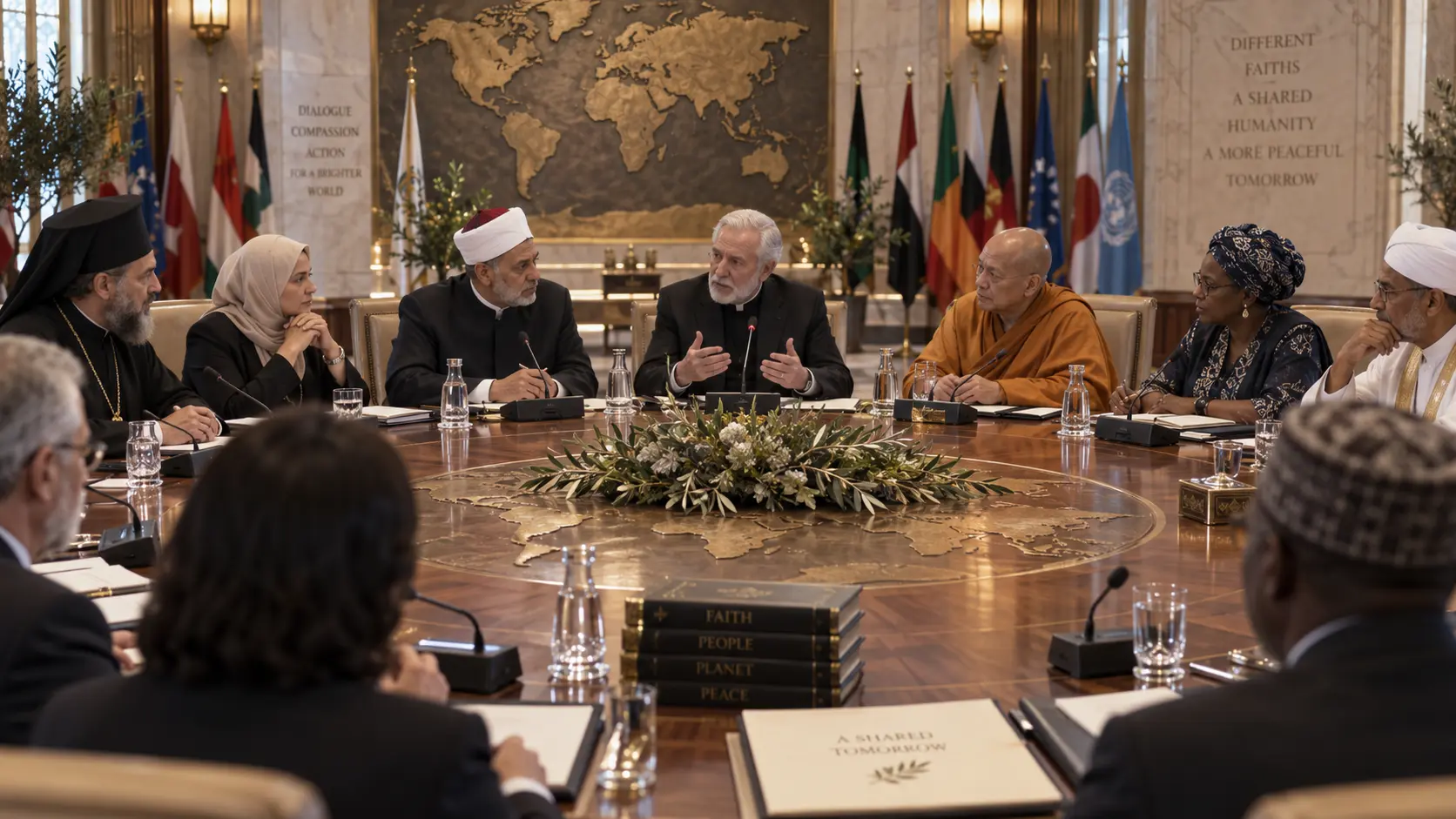
Chamber One
Representatives of the world's major religions, faith communities, scholars and spiritual institutions. Long-term membership of approximately 1,000 representatives.
Chamber Two
Representatives nominated by participating states and approved international institutions. The chambers remain separate but may hold joint peace sessions.
Article 9
Guardian of the founding philosophy and long-term vision, without authority to override the Constitution. Syed Ali is recorded as initiator and founder.
Article 12 – 13
Principal executive officer for daily international operations: secretariat, programmes, membership, sessions, partnerships, research and finance.
Article 11
The initial governing body: approves the Constitution, establishes the headquarters, appoints officers and protects the founding mission.
Advisory and moral bodies, never doctrinal authorities.
Moral guidance, peace appeals, advice on sensitive religious matters and support for reconciliation. It never determines the theological validity of any religion.
International cooperation, peace initiatives, humanitarian coordination, heritage protection and liaison with ministries and organizations.
Former diplomats, jurists, academics, negotiators, humanitarian and business leaders offering strategic advice without executive authority.
Research publications, policy papers, peace studies, religious literacy, hate-prevention research and university collaboration.
An international platform for women religious leaders, scholars, educators and peacebuilders in dialogue, mediation and community leadership.
Cooperation during emergencies, and facilitated dialogue where communal tensions exist, always with the consent of the parties involved.
A professional permanent secretariat operating independently under the Constitution.
The principal international headquarters is to be established in Italy; the specific city and registered office are determined by the Founding Council after incorporation.